

Table of Contents Show
When it’s time for a waterproof watch, strap material is a top choice for everyone. However, rubber is not a single material. All the compounding, construction, and closure alter the feel and longevity of a strap. This guide answers some of the most frequently asked questions about the HydroFlex™ range.
What is a rubber watch strap made of?
The majority of rubber watch straps are manufactured from silicone, vulcanized rubber or FKM. In a photo, they appear alike, but they are different in action. Silicone is soft but absorbs lint and dust. Vulcanized rubber is widely used, durable rubber. FKM is a synthetic rubber which is resistant to heat, UV and chemicals.
What’s the difference between Classic and Loop-less HydroFlex?
Both share the same one-piece rubber construction and performance. The difference is the closure.
| Classic HydroFlex™ | Loop-less™ HydroFlex™ | |
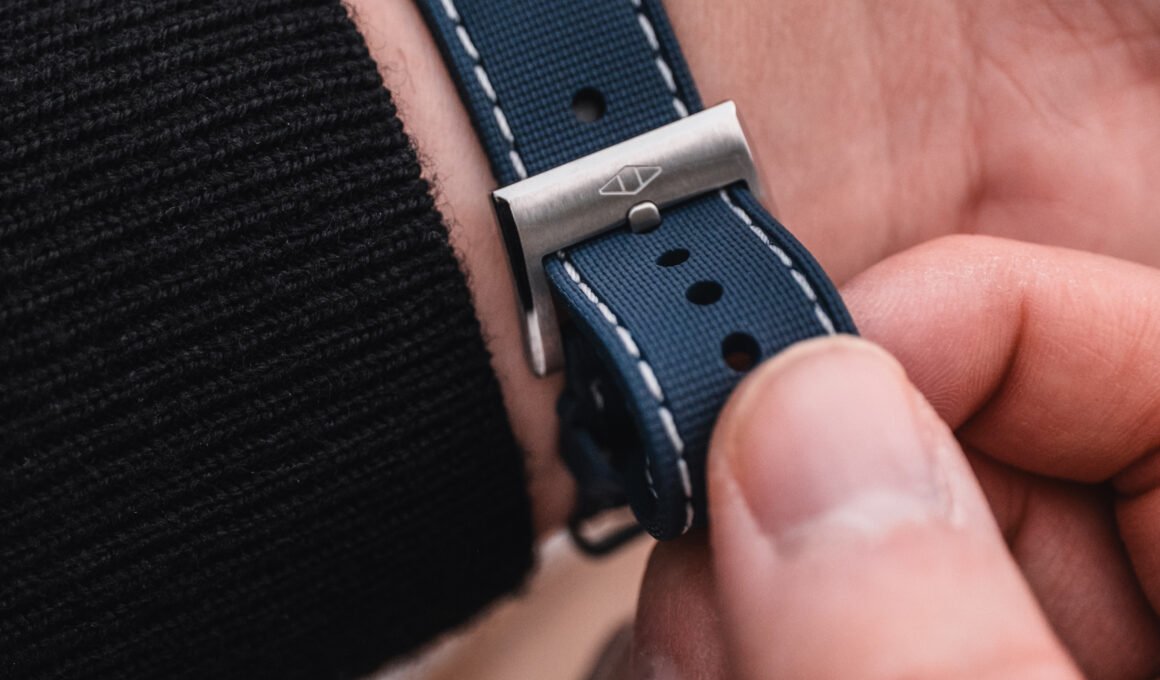
| Closure | Stainless steel tang buckle (silver or black) with keeper loops | Folding deployant clasp, no keeper loops |
| Adjustment | Holes | Set once, then fixed |
| Clasp | Optional RM Style deployant clasp (not compatible with the Loop-less clasp) | Loop-less clasp, sold separately |
| Strap price (US) | $248, buckle included | $248, clasp sold separately |
Which clasp does a Loop-less HydroFlex strap need?
It requires a deployant clasp. Artem’s Loop-less deployant clasp is available in either stainless steel or black; the right size is attached to your strap before you purchase. It is available for $92 in the U.S.
What colors does HydroFlex™ come in?
There are 13 colors, and each one has a name. Dark Matter is black with black stitching, and Event Horizon is black with white stitching. Lunar Ash is gray, Cosmic Tide is blue, and Stellar Azure is a lighter blue. Nebula Dust and Vulcan Clay are two browns, and Titan Dune is beige. Orbital Moss is green. Solar Flare is orange, Ion Glow is yellow, and Blood Moon is red. Nova Light is white. If you’re not sure, black and gray sit closest to most dials and cases, and the brighter colors show up more on the wrist.
Is a rubber strap comfortable in hot weather?
A rubber strap can sit on the wrist for a full day without bothering you, and the shape has a lot to do with it. HydroFlex™ is curved to follow the wrist, so the pressure is spread out and nothing digs in. The embossed surface flexes with each movement. Heat, cold and sweat don’t change its shape. If you’ve worn rubber before and found it stiff or sweaty, this one is made to avoid both.
What size rubber strap do I need?
A compatible OEM Omega deployant clasp will also function. The size of the clasp needs to be consistent with the width of the strap, not the width of the lug. If the clasp size is 18mm, then the strap must also be 18mm wide at the clasp, regardless of the lug size.
What length should I choose?
Standard length is for wrist sizes 6.5-7.75 inches long. XS (5.1 to 6.4 inches) and XL (7.8 to 9.1 inches) are offered on select widths. The classic HydroFlex is designed for wrists ranging from approximately 6.2 to 7.5 inches.
Can you swim with a rubber strap?
Yes. Unlike leather, HydroFlex is waterproof and salt-proof. It doesn’t stain or stiffen in a pool or the sea. Washing off with clean water afterward is a good hygiene practice. The resistance of your watch still determines your maximum depth and duration.
Does rubber change over time?
Much less than leather. The compound is made to be flexible, withstand heat and cold, and retain shape. The surface will still show marks, and the buckle/clasp area will wear out the most, as it does on any strap.
Conclusion
A rubber strap is a good option for watches intended for use in water, heat, or at the end of the day rough handling. When looking around, keep in mind the compound, the construction, the closure, and the taper. Next, you’ll need to find the width of your lugs, and if you are purchasing a loopless strap, you’ll need to measure the width of the clasp end.