



Table of Contents Show
Spend enough time on watch forums and you’ll hear it sooner or later: never put leather on a dive watch. It gets repeated with the same confidence as “no brown shoes with a black suit”, and like most style rules, it’s about half right.
Leather and water don’t get on. But most dive watches never go deeper than a hotel pool, and plenty spend their lives at desks, in cars and across restaurant tables. For that kind of life, a good leather strap can make a sports watch look warmer and more personal than the bracelet it came on.
Where the rule came from
The rule made sense when it started. Tool watches were built for jobs, and their straps had to survive salt water, sweat and rough handling. Most leather of the time didn’t. It soaked up water, stretched, started to smell and eventually cracked.
What has changed is how we wear these watches. A diver today is far more likely to be paired with a shirt than a wetsuit. So the real question isn’t whether leather can handle the ocean. It’s whether leather can handle your week, and for most people the answer is yes.
What actually ruins a leather strap
It’s rarely one dramatic soaking. Leather straps tend to die slowly, from everyday habits:
- Putting it on damp. A splash while washing your hands won’t do much. Strapping it on straight after a shower, day after day, will.
- Sweat. Salt and natural oils work their way in, especially in hot weather. That’s where the dark band near the buckle comes from.
- Wearing it too tight. A strap pulled to the last hole bends sharply at the same spot every time and wears through faster.
- Heat. Drying a wet strap on a radiator or in strong sun leaves it stiff and brittle.
Let it get a bit worn in
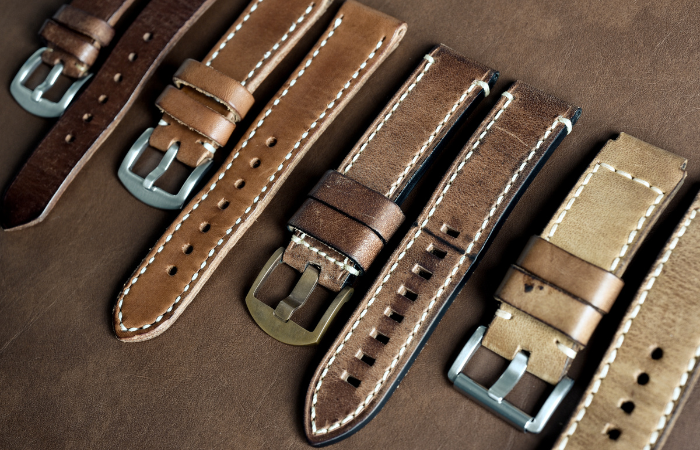
One of the best things about good leather is that it keeps a record of how you’ve lived in it. Scuffs soften, the colour deepens where your wrist rubs, and the strap slowly shapes itself to you. On a sports watch, that lived-in look suits the case far better than a glossy factory finish.
It only happens with decent leather, though. Heavily coated leather tends to look the same until the day it cracks. Full-grain, traditionally finished leathers age properly. The Barenia calfskin used by Artem Straps for its Loop-less leather straps is a good example: water tends to bead off the surface instead of sinking in, yet the leather still picks up a patina over the months.
Five minutes of care a month
You don’t need a shelf full of products. For most straps, this is plenty:
- Wipe it with a soft, dry cloth after a hot day or a workout.
- If it gets properly wet, take it off and let it dry flat at room temperature, away from heaters.
- Rotate it. Even two straps on alternate days will make both last much longer.
- Every couple of months, rub in a little leather conditioner and buff off the excess. Test it on the underside first, as some conditioners darken lighter leathers.
- Leave a finger’s width of room under the strap. Your wrist breathes better and the leather bends less.
If you swim, surf or sail, switch to rubber or sailcloth for the day. Nobody needs to prove a point at the beach.
Buckle or deployant?
A traditional pin buckle is simple and easy to adjust, but it means pulling the strap through itself every time you take the watch off.
A deployant clasp avoids most of that. The strap stays set at your size and the clasp folds open and shut, so the leather isn’t bent and tugged through the same hole every day.
The catch is that most leather straps weren’t designed with deployants in mind. Keepers and loops get in the way, and the whole thing can feel bulky. That’s the thinking behind the Loop-less design from Artem Straps: no keepers, a clean line from lug to clasp, and quick-release spring bars so you can move the strap between watches without a tool.
So, should you try it?
If your diver spends most of its time on dry land, give it a go on leather. Pick something with a bit of texture, keep a rubber or sailcloth strap for wet days, and give the leather a few months to settle in. There’s a good chance you’ll reach for that combination more often than the bracelet.
Watch rules are fun to argue about online. Wearing what you actually like is more fun.