




Table of Contents Show
A strap in the wrong color doesn’t ruin a watch. It just makes it look slightly off, in a way most people can’t name. The dial feels busier than it should, the case looks bigger than it is, or the whole thing reads as dressier or sportier than the day calls for. Nearly every one of those problems traces back to a handful of color decisions, and all of them are easy to undo.
Here are the mistakes that come up most, why they happen, and which Artem Straps color solves each one.
Mistake 1. Matching the dial exactly
The most common instinct is to put a blue strap on a blue dial, a green strap on a green dial, and call it done. Sometimes that works. Often it flattens the watch, because the eye has nothing to separate the dial from the strap.
The fix is to connect rather than match. Pick a strap one or two shades darker than the dial, or pick a strap that echoes a secondary color such as the lume, the hands or the bezel. Navy with white stitching on a blue dial works because the white picks up the hands, not because the navy matches the dial.
Artem’s blue watch straps include navy in both tonal and white stitching for exactly this reason.
Mistake 2. Ignoring the case metal
A strap color is chosen against the dial and then put on a case that disagrees with it. Black on bronze is the usual example. The strap is fine, the dial is fine, and the combination looks cold.
Yellow metals want warm straps. Brown, tan, sand beige and khaki green all flatter gold, rose gold and bronze. Steel is forgiving and takes almost any color. Black cases, whether PVD, DLC or ceramic, look best with black, gray or a single bold accent.
For warm cases, look at Artem’s Barenia leather in Saddle Tan and Bridle Brown, the Titan Dune beige, or the Orbital Moss green.
Mistake 3. Buying the bold color first
Red, orange and yellow straps are the ones that get photographed and the ones that get bought on impulse. On the right dial they’re excellent. On most dials they’re a strap worn twice.
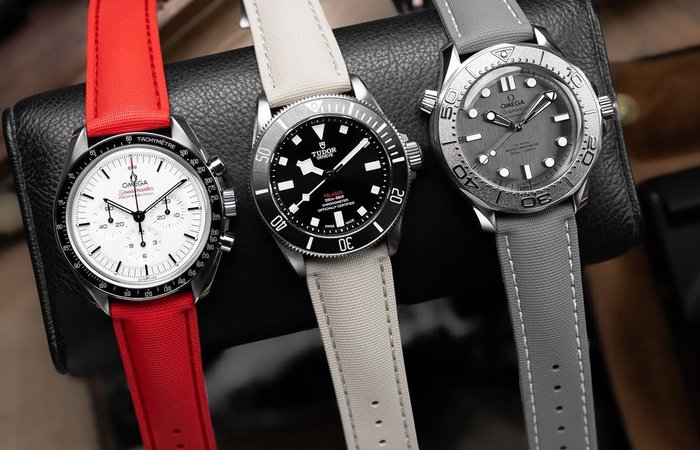
The fix is order. Buy black first, navy second, gray third. Once those three are covered, a bold color becomes a choice rather than a gamble. When you do buy bold, buy it for a dial that already has that color on it. A red strap on a black dial with a red seconds hand looks designed. The same strap on a plain dial looks borrowed.
Artem’s red watch straps are led by the Blood Moon HydroFlex, which is at its best on black and white dials with red accents.
Mistake 4. Forgetting the stitching
Two black straps can look nothing alike. Black with black stitching is formal and quiet. Black with white stitching is sporty and reads as a dive strap from across the room. Buyers who want the first and order the second end up with a strap that’s right in color and wrong in character.
Decide what the stitching should do before you decide the strap color. Tonal stitching disappears and suits dress watches and office wear. Contrast stitching adds energy and suits divers and chronographs. A stitch that matches a dial accent is the subtlest way to tie strap and watch together.
Artem’s black watch straps come with black, gray, white, blue or red stitching, which covers every version of the same color.
Mistake 5. Choosing a color the material can’t support
White and pale beige look clean on a product page. On a fabric or leather strap they show every mark within a week. On rubber they wipe clean and stay pale for years.
Match the color to the material. Light colors belong on rubber. Dark colors work on anything. Artem’s Nova Light white and Titan Dune beige are both HydroFlex rubber for this reason, and the sand beige sailcloth is a strap for careful days rather than careless ones.
Mistake 6. Defaulting to black when gray would be better
Black is the safe answer and it’s usually right. On a gray, silver or slate dial, though, black can overpower the watch and make a subtle dial look heavy. Gray straps solve this. They’re softer than black, still neutral, and flatter steel cases better than almost any other color.
Gray is also the color most owners skip and most owners end up wearing once they try it. Artem’s gray watch straps include a gray sailcloth, the Lunar Ash HydroFlex and a gray nylon.
Mistake 7. Using one color for every setting
A single strap color can’t cover the office, the beach and the weekend equally well. Black does most of it. It doesn’t do all of it. Owners who refuse to swap end up with a watch that looks formal at the pool or casual at a meeting.
The fix is a short rotation. Black or navy for work, gray or beige for the weekend, a bold color for the days that call for it. With quick release spring bars, swapping takes under a minute, which removes the only real excuse for not doing it.
Mistake 8. Letting the color choose the size
It sounds obvious, but a strap in the perfect color and the wrong lug width is a strap that doesn’t fit. Odd sizes such as 19mm, 21mm and 23mm are where this happens most, because the color the buyer wants is often only offered in 20mm or 22mm elsewhere.
Artem offers every color across lug widths from 18mm to 23mm and in three lengths, so the color decision doesn’t have to compromise the fit.
A simple way to get it right
Look at the dial and name its main color and one accent. Look at the case and name the metal. Decide whether the day the strap is for is formal, casual or outdoors. Those three answers narrow the choice to two or three colors, and from there it’s taste.
Every Artem strap comes with a two year craftsmanship warranty and a thirty day fit and feel return window, so a color that looked right online and wrong on the wrist can go back. That’s the last mistake to avoid, keeping a strap you don’t wear because returning it felt like effort.